
In depth
The Minniti Decree: what it requires of reception centres and how to comply
The Minniti Decree of 17/08/2017 requires reception centres to report attendance and flows to the Prefecture and to serve notices on residents. Immigreer helps centres meet these obligations with electronic attendance tracking, a single cloud archive of movements and a guided workflow for notices. Formats, channels and deadlines for submissions should always be checked with your own Prefecture.
What obligations does the Minniti Decree place on reception centres?
The Minniti Decree of 17/08/2017 directly affects the day-to-day work of reception centres for migrants and asylum seekers. The obligations placed on centres can be summarised in three points.
- Reporting attendance: residents' attendance must be reported to the Prefecture.
- Reporting flows: arrivals at and departures from the centre must be reported to the Prefecture.
- Notices to residents: communications addressed to residents must be formally served.
Immigreer covers these obligations for SAI, CAS, CARA, MSNA and Hot Spot centres. What changes is the facility's internal organisation, not the need for complete and verifiable data.
The operational detail is not always the same everywhere. Submission formats, channels and deadlines may depend on the instructions received: always check the instructions of your Prefecture and keep them with the centre's records.
For a centre, complying with the decree above all means having reliable data on who is present, who comes and goes, and which communications have been delivered. This is where a paper register shows its limits: sheets to print, signatures to collect, data to copy out by hand.
How to report attendance to the Prefecture without signed sheets
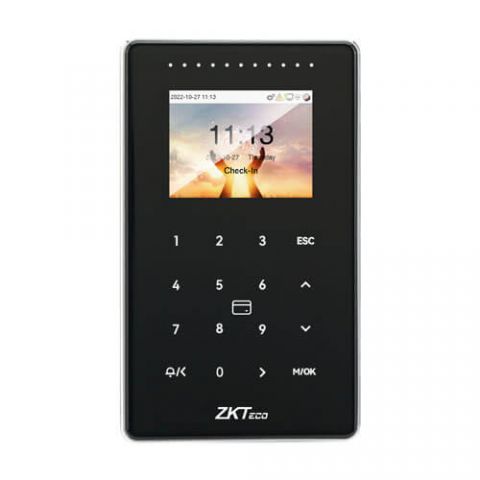
Without an electronic system, attendance sheets have to be downloaded, printed and signed by hand by residents. With tracking linked to Immigreer, this step disappears.
The process takes three steps:
- Tracking: the resident records their attendance with a smart card, a fingerprint or both. Each access is recorded the moment it happens and appears on a monitoring dashboard.
- File generation: the data flows into the cloud software, which produces the attendance file, already in the format required by the SUA.
- Submission: the file generated by Immigreer is attached to the submission instead of hand-signed sheets.
Alternatively or additionally, an Android app on a tablet collects the resident's graphometric signature for attendance, deliveries of personal items and pocket money, with PDF reports viewable from a PC.
On privacy, biometric data remain on the resident's smart card and not in a central archive. The capture and management of fingerprints comply with Italian Data Protection Authority (Garante Privacy) decision no. 513 of 12 November 2014 on biometrics and with the GDPR.
Technical details of readers and smart cards are described on the page about attendance tracking with badges and fingerprints.
Arrivals and departures: why you need a single archive
The second obligation concerns flows: arrivals at and departures from the centre that must be reported to the Prefecture. The risk here is having information scattered across registers, sheets and different mailboxes.
In Immigreer, arrivals and departures are kept in a single cloud archive. This way the flows to be reported are always in order and consistent with attendance.
The tools involved are:
- Resident file: admission record, entry and exit movements and an ID card with a barcode.
- Visitor log: who enters the centre and why, with time in, time out, reason for the visit and related documents.
- Ready-to-use reports: attendance, movements and services provided in a single list, exportable to PDF and Excel.
The practical advantage is that each piece of data is entered only once. Whoever prepares the report for the Prefecture does not have to copy data by hand or compare different lists.
If your organisation runs several facilities, each company and each centre sees only its own data, and visibility is granted explicitly. Every operation is logged: who, what, when.
Notices to residents: from certified email to signed receipt
The Minniti Decree also sets out obligations to serve notices on residents. Immigreer manages them with a three-step workflow linked to the centre's certified email (PEC).
- The PEC arrives: Immigreer reads the PEC and immediately flags it to the centre's administrators.
- The resident signs the receipt: the software prepares the receipt to be handed to the resident for signature.
- Reply to the Commission: the reply PEC is sent to the Territorial Commission with the signed receipt.
The advantage is traceability. The communication received, the signed receipt and the reply remain linked to one another and to the resident, inside the management system.
Other tools help ensure nothing gets lost along the way:
- integrated webmail and PEC, to read, write and register mail without leaving the portal;
- electronic document register with sequential numbering, signatories and approvals before sending;
- remote digital signature, with no USB key or card reader.
The full list is on the Immigreer features page. For notice deadlines and procedures, refer to your Prefecture's instructions.
What the Prefecture sees and why it matters for the centre
Immigreer is not designed for centres alone. It also gives Prefectures digital tools to check and monitor the services of SAI, CAS, CARA, MSNA and Hot Spot centres.
The working model is simple:
- Operators record residents, attendance and services in their own Immigreer, as part of their everyday work.
- The Prefecture consults the data of the centres in its area directly in the software, without requesting sheets or files.
- Exchanges remain traceable: requests, replies and attachments travel within the system, with deadlines and history available to both parties.
For a managing organisation, this means the quality of day-to-day data matters. Attendance recorded in real time and up-to-date movements make inspections and replies to institutional requests more orderly.
Information stays current and verifiable even in humanitarian emergencies, when a clear and quick overview is needed. On security, Codebase Srl, which develops Immigreer, is certified to ISO 9001, ISO/IEC 27001, ISO/IEC 27017 and ISO/IEC 27018.
Find out more on the Immigreer for Prefectures page.
How to organise the centre to stay compliant
Software helps, but compliance also depends on how the centre organises its work. Some good practices:
- Gather the Prefecture's instructions on submission formats, channels and deadlines and keep them up to date.
- Record attendance in real time, with a badge, fingerprint or tablet, rather than reconstructing it at the end of the day.
- Enter arrivals and departures in the resident file as soon as they happen, so flows stay aligned.
- Assign roles: who checks the PEC, who hands over receipts, who sends replies.
- Use the reports in PDF and Excel for regular internal checks.
Regulations can change. Immigreer has been online for 15 years and is updated in line with ministerial regulations: when the rules change, the software is updated. It nonetheless remains the organisation's responsibility to check the obligations in force.
A summary of how Immigreer covers these obligations is on the page dedicated to Minniti Decree compliance.
Frequently asked questions about the Minniti Decree
Which obligations does Immigreer help meet?
The obligations to report attendance and flows to the Prefecture and to serve notices on residents set out in the Minniti Decree of 17/08/2017. For the operational details required in your area, check your Prefecture's instructions.
Are hand-signed attendance sheets still needed?
No. With electronic tracking via badges and fingerprints, the file generated by Immigreer is attached to the submission. The file is already in the format required by the SUA.
Do residents' fingerprints end up in a central archive?
No. Biometric data remain on the resident's smart card. The capture and management of fingerprints comply with Italian Data Protection Authority decision no. 513 of 12 November 2014 and with the GDPR.
Which types of centre is Immigreer designed for?
For SAI, CAS, CARA, MSNA and Hot Spot centres, as well as for Prefectures. Prefectures have dedicated tools to check and monitor services.
What happens if regulations change?
Immigreer is constantly updated in line with ministerial regulations. This way the centre works with current rules, while the organisation remains responsible for checking the obligations in force.
See Immigreer at work in your centres
Request a no-obligation demo covering attendance, flows to the Prefecture and notices to residents: we will get back to you within one working day.
Updated on